
All Newsindustry
The 2026 Surge: How Affordable Models and Grid Stability are Reshaping Sri Lankan Mobility
EVPlug Team5 min readMarch 18, 2026
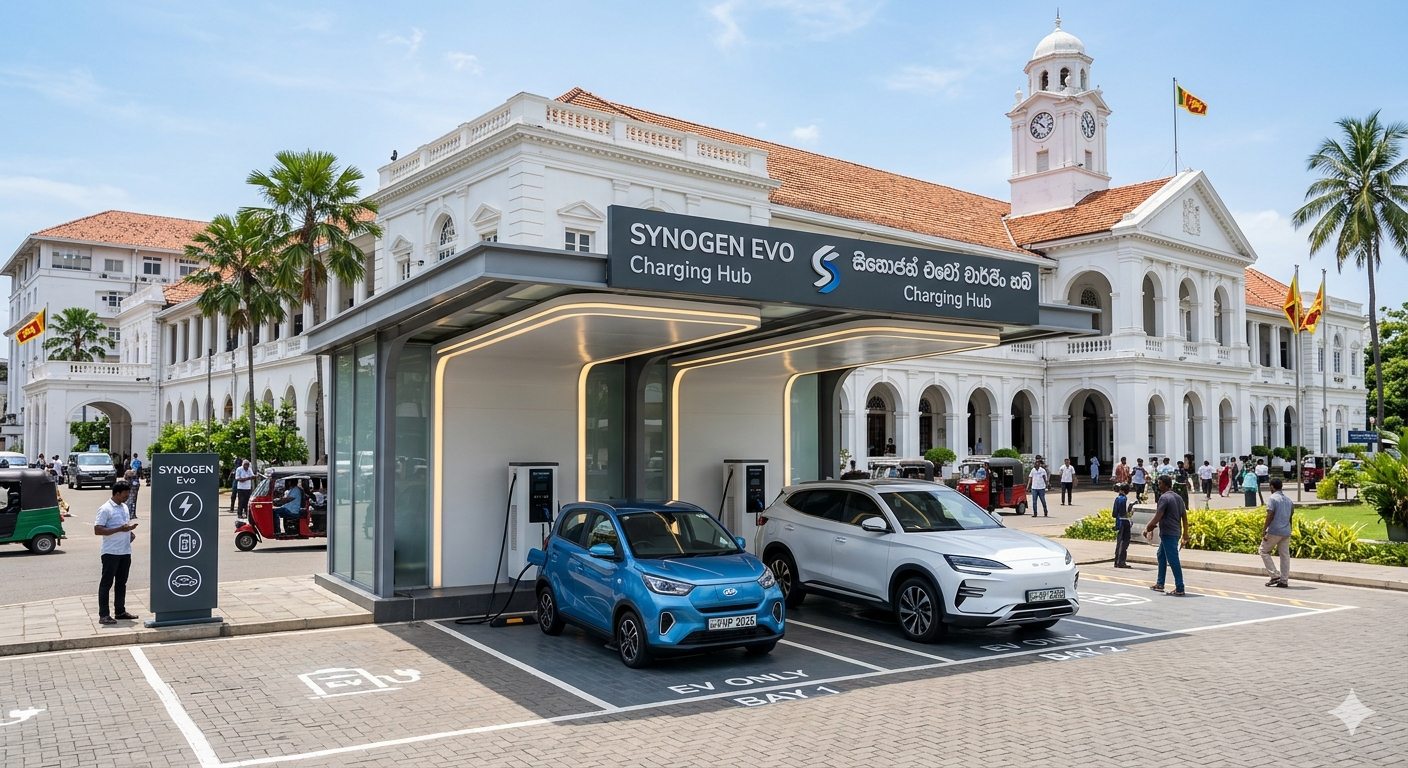
The Sri Lankan automotive landscape is witnessing a pivotal transformation this month. Following the stabilization of the economy and the strategic easing of import restrictions, electric vehicles (EVs) have officially moved from a luxury curiosity to a mainstream mobility solution, now accounting for 10% of all passenger vehicle imports.
The Rise of the "Affordable" EV
The biggest headline this week is the official launch of the BAW E7 Pro by Browns EV. Priced at Rs. 5.8 million, it targets the urban middle-class professional.
Battery: 22.29 kWh LFP (Lithium Iron Phosphate)
Range: 260 km per charge
Charging: 30% to 80% in 35 minutes via DC fast charging.
Additionally, John Keells CG Auto has introduced the BYD Sealion 8, a premium electric SUV, signaling that the market is maturing across all price brackets.
Critical Infrastructure Milestones
Infrastructure is finally catching up with vehicle sales. Synogen Evo has launched the island's first "Comprehensive EV Charging Hub" at Independence Arcade, Colombo. Unlike previous stations, this hub features dedicated bays for 4-wheelers, 3-wheelers, and even electric motorbikes, creating a central node for the city's delivery fleets and commuters.
To support this influx, WindForce PLC and Vidullanka have been awarded contracts for 12 standalone Battery Energy Storage Systems (BESS) totaling 120MW/480MWh. These systems are designed to store excess solar and wind energy, ensuring the national grid remains stable as more residents plug in their vehicles.
Policy & Economic Reality
The government has introduced a 2.5% Social Security Contribution Levy (SSCL), now collected upfront at the port rather than at the point of sale. While this increases initial costs for importers, it aims to streamline tax compliance. Furthermore, amid global energy fluctuations, the President has urged EV owners to utilize daytime charging (10 AM – 4 PM) to take advantage of peak solar production and avoid straining the grid during evening hours.